
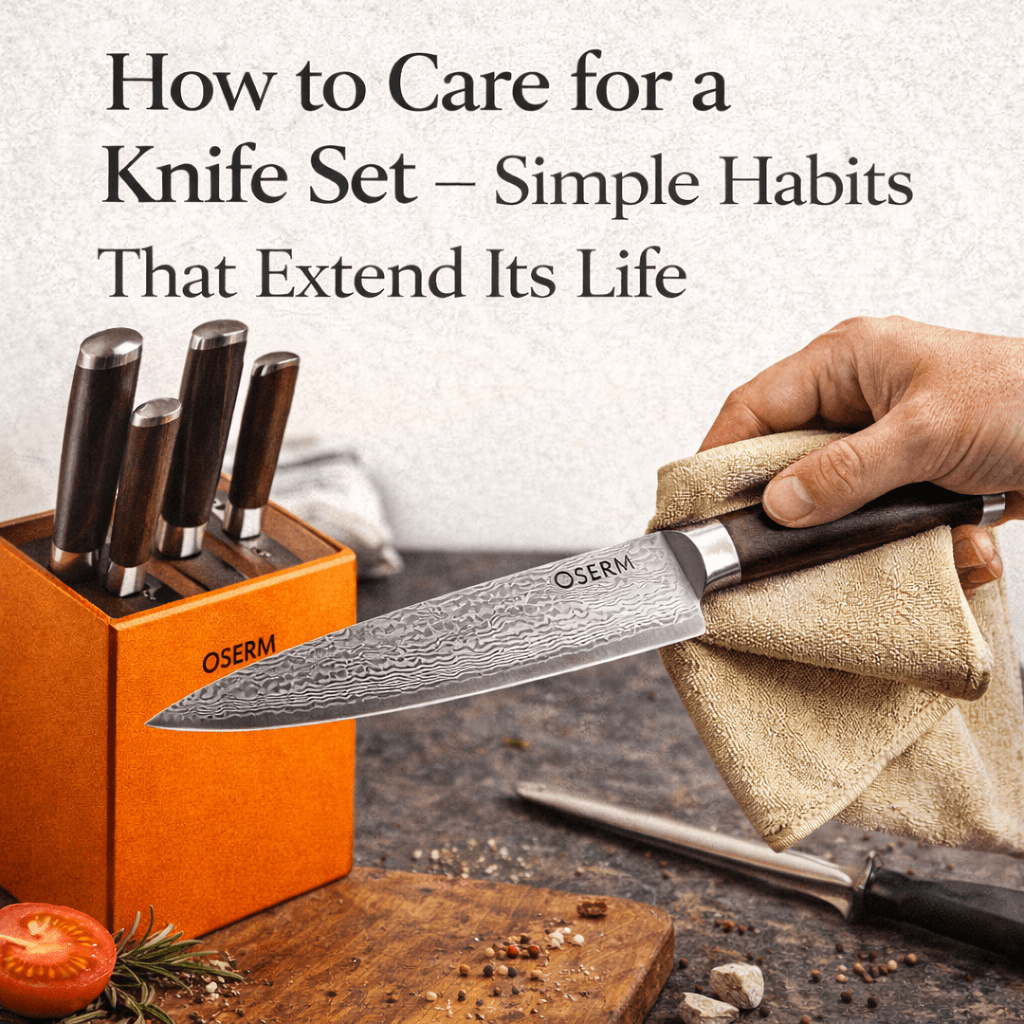
How to Care for a Knife Set – Simple Habits That Extend Its Life
A good knife set does not demand perfection. It demands consistency.
Many people believe that premium knives require complicated routines or professional-level maintenance. In reality, a well-designed knife set only needs a few simple habits — practiced regularly — to perform beautifully for decades.
This guide focuses on what truly matters: realistic, everyday care that fits into modern life.
1. The Golden Rule: Use the Right Knife for the Right Task
One of the most overlooked aspects of knife care is proper usage.
Using the correct knife for each task reduces unnecessary stress on the blade and preserves edge integrity.
- Use the chef knife for general prep and slicing
- Use the bread knife for crusty or hard surfaces
- Use the paring knife for detail work
- Avoid using knives on bones, frozen food, or hard shells unless designed for it
This is one of the key reasons knife sets last longer than single knives — tasks are distributed, not forced.
2. Hand Washing Is Not a Ritual — It’s a Habit
Dishwashers are convenient, but they are not kind to knives.
High heat, strong detergents, and vibration all shorten blade life. Hand washing, on the other hand, takes less than a minute and protects:
- the blade edge
- the steel structure
- the handle material
Wash gently with warm water, dry immediately, and move on. No special tools required.
3. Drying Matters More Than People Think
Leaving knives wet is one of the fastest ways to degrade even high-quality steel over time.
A quick wipe with a clean towel prevents:
- water spots
- long-term corrosion risk
- handle wear at connection points
This small habit has a surprisingly large impact on longevity.
4. Honing vs Sharpening – Know the Difference
Many people confuse honing with sharpening.
Honing realigns the edge. Sharpening removes material to create a new edge.
For most home cooks:
- hone lightly every few weeks or as needed
- sharpen professionally once or twice a year
This balance maintains performance without overworking the blade.
5. Storage Is Part of Care
How knives rest when not in use matters.
Proper storage prevents:
- edge dulling
- accidental damage
- safety issues
Knife blocks, magnetic strips, or blade guards all work — the key is keeping the edge protected and isolated.
6. Why the OSERM +1 Chef Knife Helps With Maintenance
The most-used knife is also the most stressed one.
By including an extra chef knife in every set, OSERM allows:
- rotation between blades
- reduced wear on a single edge
- shared cooking without rushing maintenance
This design choice quietly extends the life of the entire set.
7. What You Don’t Need to Worry About
A quality knife set should not make you anxious.
You do not need:
- special oils for daily use
- constant sharpening
- extreme handling precautions
Good knives are meant to be used — respectfully, not fearfully.
8. Care as a Relationship, Not a Chore
Over time, caring for a knife set becomes instinctive.
You wash, dry, store, and move on. The knives respond with consistent performance, comfort, and reliability.
This quiet exchange is what turns tools into trusted companions.
Weekly Deal 🔥
Explore OSERM 3+1, 5+1, and 7+1 Knife Sets — thoughtfully designed for performance, balance, and easy long-term care.
You Might Also Like
- How Long Should a Good Knife Set Last?
- The Hidden Economics of a Knife Set
- 3+1 vs 5+1 vs 7+1 – Which Knife Set Fits Your Life?
Tags: OSERM knife care, how to maintain knives, knife set maintenance, VG-10 Damascus knives, kitchen knife care tips