The Texture of Life – How a Fine Knife Reawakens Our Sense of Touch
Modern life numbs our senses. We tap on glass screens, type on uniform keys, handle packaged food, and move through days filled with flat, repetitive textures. Our hands — once our most intuitive instruments — no longer feel the world the way they used to. But in the kitchen, and especially through the blade, we rediscover touch. A fine knife is not just a cutting tool; it is a gateway back into the physical world — a reminder that texture is meaning.
With an OSERM Damascus knife in hand, you don’t simply prepare ingredients. You reawaken your senses, reconnect with your environment, and rediscover the rich, intricate textures that define life itself.
1. Touch: The First Language We Ever Learned
Long before we speak, we touch. Touch tells us what is safe, what is warm, what is alive. Yet as we grow older, our lives become dominated by abstractions — information, speed, efficiency — and touch becomes an afterthought.
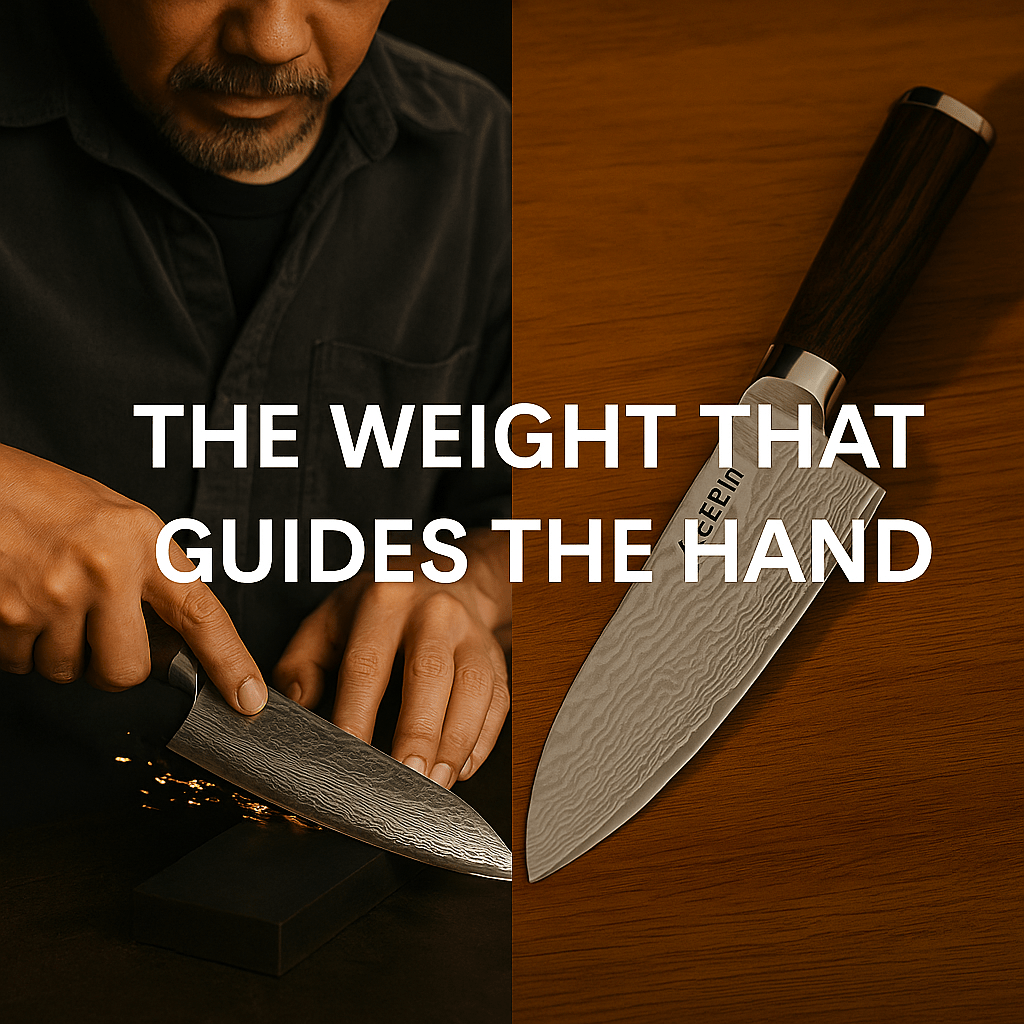
The kitchen brings it back. And the knife is the conductor of this sensory orchestra. The moment the blade meets the ingredient, your hand receives information: firmness, moisture, resistance, vibration. A great knife helps translate these signals accurately, giving your hand its forgotten fluency.
This is why a sharp OSERM blade feels “alive.” It communicates. It reveals. It reminds us that creation begins with sensation.
2. The Damascus Pattern: Texture You Can See and Almost Feel
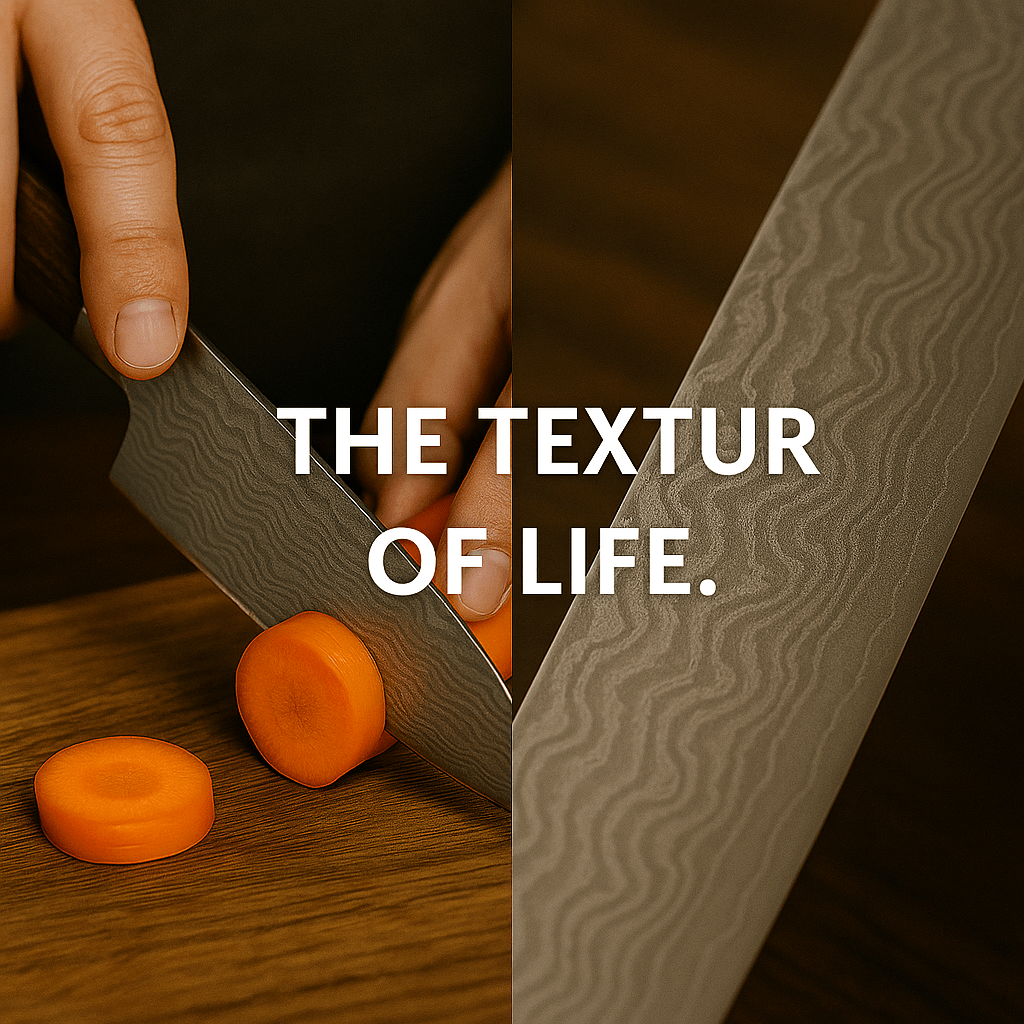
A Damascus blade carries a texture not just on the tongue of the steel, but also on the eye. Its waves, flowing like wood grain or rippling water, evoke movement and depth. These patterns are not painted — they are forged into the metal by repeated folding, hammering, and polishing.
To touch a Damascus blade is to touch time, technique, and tension — all frozen into a single surface. The fingers feel its subtle micro-ridges, its cool stability, its organic irregularity. This is texture with history — a tactile story crafted layer by layer.
3. Ingredients Speak Through Texture
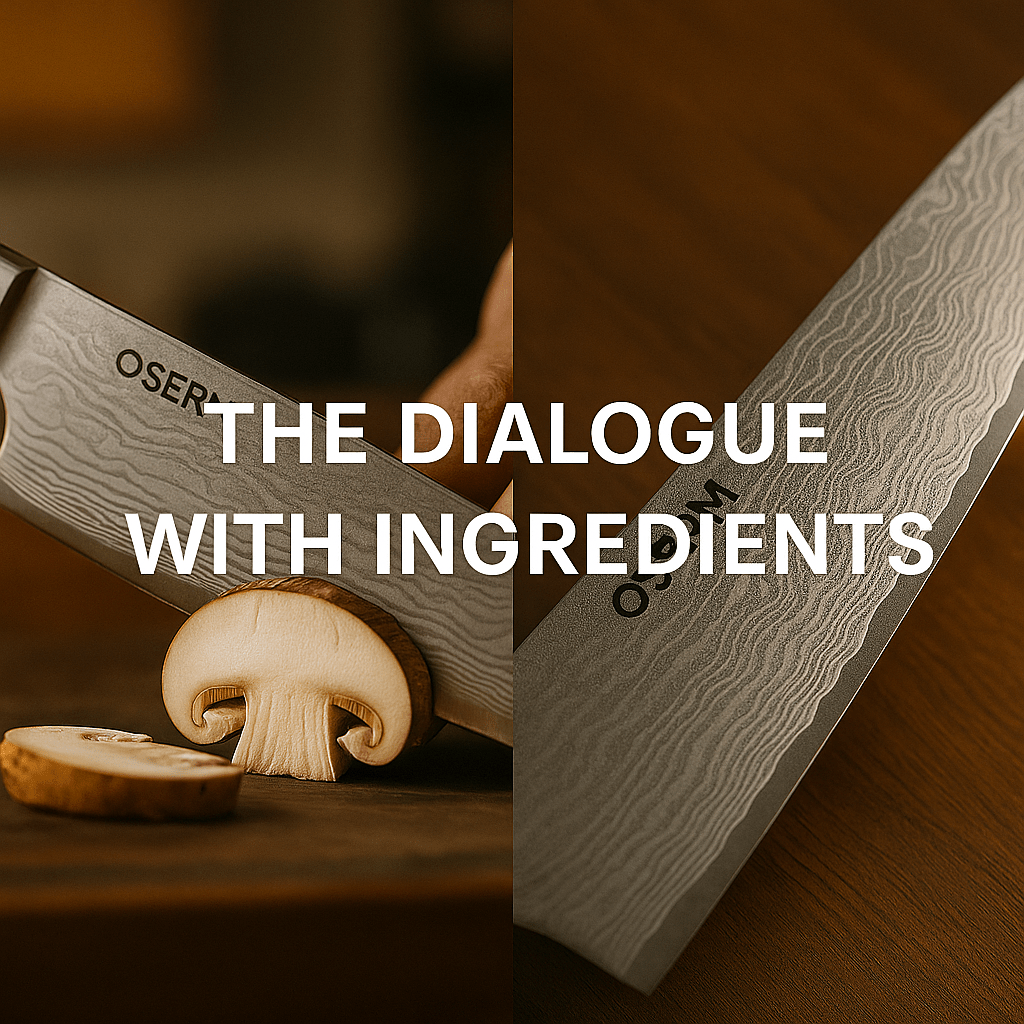
Every ingredient has its own identity, and texture is its voice. A tomato whispers. A carrot speaks firmly. A mushroom has a quiet softness. A fish fillet offers a clean glide. A good knife doesn’t just cut; it lets you hear these voices through your hands.
When you use an OSERM knife, the feedback becomes clearer and more vivid:
- The resistance of a potato tells you the knife is aligned correctly.
- The crispness of herbs reveals their freshness.
- The smoothness of sashimi tells you your edge is perfect.
- The subtle vibration of cutting meat teaches you its fiber structure.
Texture becomes your teacher. And the knife becomes your translator.
4. The Handle: Where Your Hand Meets Art
The OSERM resin-and-wood handle is not only visually stunning; it is designed to restore the beauty of tactile experience. Its smoothness contrasts with the organic pattern of the wood beneath, creating a harmonious balance of warm and cool, hard and soft, nature and craft.
When your fingers wrap around this handle, they feel anchored — connected — as if holding something alive rather than something manufactured. This connection is what makes cooking feel personal again.
5. Craftsmanship You Can Feel, Even with Eyes Closed
Many tools look beautiful but feel empty. A true handcrafted knife feels meaningful even when unseen. Close your eyes and run your thumb along the spine of an OSERM blade — it is deliberately rounded to rest comfortably against your finger. Glide your hand along the handle — its ergonomic curves guide your grip without force.
This is tactile craftsmanship. It is design meant not just to be viewed, but to be experienced in the most intimate way — through touch.
6. Cooking as a Return to Sensory Living
When you cook with attention, textures bloom. You feel the coolness of washed vegetables, the grain of wooden boards, the weight of the knife, the yielding softness of sliced fruit. These sensations pull you out of distraction and into presence. This is not merely “mindfulness” — it is sensory awakening.
An OSERM knife amplifies this state. It becomes an anchor — a reminder that life is not only visual or digital, but physical, textured, and real.
7. The Texture of Memory
Long after a meal is finished, you remember the textures — the crunch of vegetables, the softness of fish, the satisfying glide of steel. Touch leaves deeper impressions than sight. And the more meaningful the touch, the longer the memory.
This is why an OSERM knife becomes unforgettable. It is not the blade alone that stays with you — it is the sensation of using it, the tactile confidence, the way it reintroduces you to the world through your hands.
Weekly Deal 🔥
Rediscover your sense of touch with OSERM’s Damascus Knife Collection. A blade crafted not just to cut, but to awaken. Feel the difference — in texture, precision, and presence.
You Might Also Like
- The Dialogue with Ingredients – Why Understanding Material Elevates the Knife and the Cook
- The Rhythm of the Blade – How a Fine Knife Teaches Us the Pace of Life
- The Hands That Shape the Blade – Why Human Touch Still Matters in a Machine-Made World
Tags: OSERM Damascus knives, texture, craftsmanship, VG-10 steel, sensory cooking, knife design, Japanese philosophy, orange gift box, tactile experience